
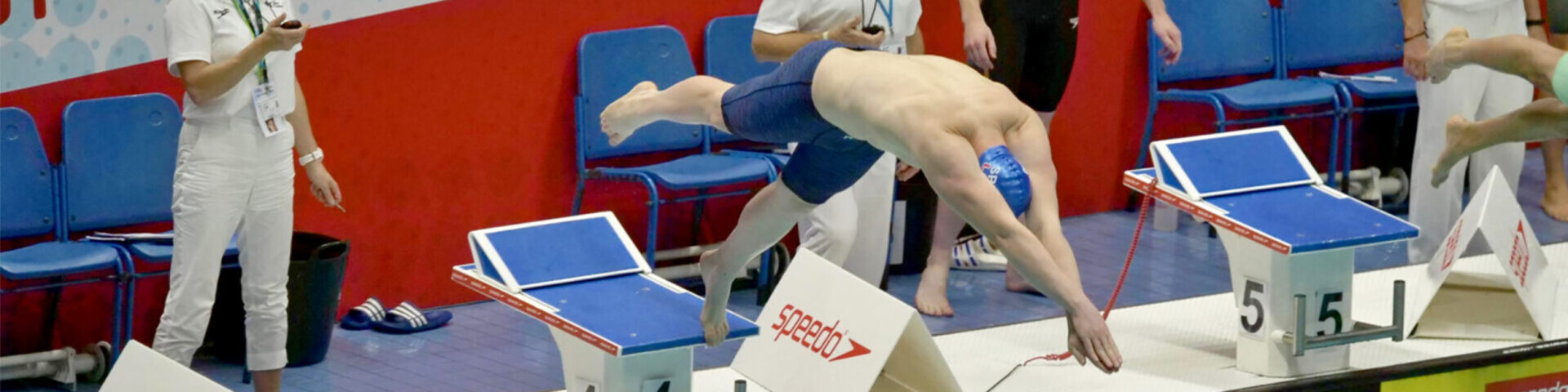

At the elite level, many swimmers have spoken about the importance of enjoying the process of training and competing. Rather than fixating on the outcome, in terms of records or medals, the focus is often on personal growth and development, and long-term engagement with the sport. Enjoying what leads to competition day, knowing you’ve prepared as well as you can, is the goal. Then go out and give it your best shot.
As a masters swimmer, that mindset is vital. Winning is always nice. Achieving PBs or setting records is a great reward. However, for most masters swimmers, success is better measured by consistency, health, enjoyment, and gradual improvement. Training in a balanced and methodical way, taking everything from every practice, is an extraordinary benefit of returning to competition.
Many masters swimmers competed as age-groupers or at university and return with a mix of positive memories, unfinished business, and occasional apprehension. But masters competitions are different. The vibe is far more relaxed and community-oriented. And while your teammates will root for you from poolside, the emphasis is on participation and self-challenge rather than comparison. You’ll only ever hear positive support.
The Practical Side of Competitive Swimming
To get back to competing, you’ll need to join a Masters club affiliated with your national governing body (e.g. Swim England). Clubs provide coached sessions, technique advice, and, most importantly, a community of swimmers who understand the challenges of masters swimming and can advise on the best meets and races to target.
You need to register with your national swimming federation, Swim England, as a Masters Category 2 member. The club typically handles this and can assist you. Once registered, you’ll have a membership or ID number, which allows you to enter licensed events. Clubs are usually the primary source of guidance on competitions and entry procedures.
Target Progress not Perfection
Many masters swimmers turn up at competitions after extensive breaks from racing – often after decades away. As a result, swimmers are far from the finished article, and that is entirely normal. Most competitors jump in and give it a go. Don’t judge yourself against the younger you.
Training for competition should be approached with patience. Many returning swimmers remember how they trained in their twenties and are tempted to jump straight back into high volumes or intense sets. This often leads to fatigue, injury, or loss of motivation. A more effective approach is to focus first on consistency and technique. Swimming two or three times per week, with a focus on efficiency, aerobic fitness, strength, and basic skills, will lay the foundation for speed later on. Improvements in stroke mechanics often deliver bigger gains than simply swimming more lengths, particularly as we get older.
Be Selective and Patient
When choosing your first competition, it pays to keep things simple. Speak to your fellow swimmers or coaches for some friendly advice. Local or regional Masters meets are ideal starting points – your club can advise. You do not always need recent race times to enter; many events accept estimated entry times, and heats are commonly seeded to allow swimmers of similar ability to race together. Once you have banked a few times, you can enter swim meets with more stringent entry criteria.
Selecting a small number of races that you enjoy and feel comfortable swimming in allows you to focus on the experience rather than the outcome. For many swimmers, the first meet back serves as a useful benchmark rather than a performance target and helps identify which events suit you best at this stage. Chances are, you’ll climb out of the water totally exhilarated and impatient to swim again.
Enjoy the process
Keep expectations realistic and flexible. Identifying the right races for your current abilities takes time, as does relearning race pacing and skills such as starts and turns. You’re on a new swimming journey, and what you swam as a younger person may not carry over to masters competitions. For some swimmers, podium finishes may be realistic. For many others, the early goals should centre on enjoyment, confidence, and producing performances you feel proud of. Progress accelerates once consistency is established.
The truth is, unless you try, you’ll never know. And that is the spirit of masters swimming. One further key piece of advice: bring good snacks.